Gardener Poplar Recycling and Sustainability Hub
Gardener Poplar champions an eco-friendly waste disposal area and a forward-looking sustainable rubbish gardening area that supports neighbourhood resilience and urban greening. This page outlines how our Poplar eco recycling hub integrates local collection, careful sorting and community reuse to keep resources circulating rather than being lost to landfill. We combine pragmatic operations with a clear target: to reach a 70% recycling rate by 2030 across household and garden streams, while improving reuse through charity partnerships.

Local Facilities and Transfer Stations
Our strategy works alongside nearby transfer stations and waste centres to ensure materials are routed efficiently. We rely on several local transfer stations (municipal and regional hubs) to consolidate loads, reduce vehicle miles and prioritise material recovery. The boroughs' approach to waste separation — typically including separate streams for food waste, garden waste, paper & card, glass and mixed plastics — helps keep contamination low and recovery rates high. By co-locating our operations near these transfer points, Gardener Poplar minimises double-handling and supports a low-carbon logistics chain.
Collection, Sorting and Materials
Collections from homes, community gardens and green spaces follow clear separation rules: food scraps go into anaerobic or composting lines; green trim and leaves enter the garden-waste compost stream; dry recyclables are split by type wherever borough kerbside schemes permit. Our sorting area emphasises manual and mechanical separation to capture high-quality streams for recycling and reuse. We also operate a small-scale on-site composting area to process garden waste into nutrient-rich compost for local allotments and planting projects.
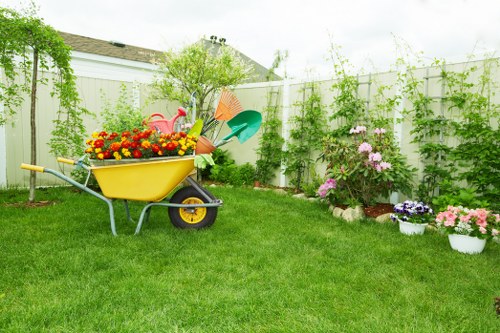 Partnerships with Charities and Reuse Schemes — reuse sits at the heart of our circular approach. Gardener Poplar works with local charities and social enterprises that accept salvaged materials: furniture for refurbishment, tools for community tool libraries, and surplus plant pots and timber for habitat projects. These partnerships reduce disposal volumes, create social value and give items a second life. Our donation network coordinates with community centres and charity shops to ensure suitable items are diverted from waste streams.
Low-Carbon Vehicles and Operational Efficiency
To minimise emissions we operate a fleet of low-carbon vans and electric-assisted trailers for last-mile collection and delivery. These vehicles are chosen to reduce noise, improve air quality and lower the carbon footprint of our operations. Route optimisation and consolidation at transfer stations, combined with lighter-weight load packing and increased payload efficiency, contribute to fewer vehicle-kilometres travelled. The result is a greener, smarter Gardener Poplar logistics system that supports both the eco-friendly waste disposal area and sustainable rubbish gardening area initiatives.
Community Composting and Soil Regeneration — our sustainable rubbish gardening area goes beyond mere disposal. We turn garden waste into high-quality compost that is used to regenerate soil in community gardens, improve tree pits and support urban planting schemes. By closing the loop locally we reduce the need for chemical fertilisers and strengthen the resilience of green spaces across Poplar and surrounding neighbourhoods.
Designing an Eco-Friendly Waste Disposal Area
Physical design matters: our facility incorporates permeable surfaces, rainwater harvesting, and vegetated screening to reduce runoff and support biodiversity. The layout separates delivery zones, sorting bays and temporary storage to maintain cleanliness and to prevent cross-contamination between recycling streams. Clear signage and staff guidance help residents and gardeners deposit materials correctly, aligning with borough-level separation rules and improving capture rates for recyclable fractions.
What We Recycle and Reuse
Gardener Poplar coordinates a wide range of recycling activities appropriate to the area. Key streams and activities include:
- Paper and Card — collected and baled for processing.
- Glass — separated and sent to regional glass processors.
- Plastics — sorted by polymer type where possible, following borough guidance.
- Food Waste — diverted to anaerobic digestion or composting programmes.
- Garden Waste — composted on-site or at local green waste facilities for soil improvement.
Community Roles and How to Get Involved
Gardener Poplar recycling thrives when residents, volunteers and local organisations participate. Community clean-ups, compost swaps and seed exchanges are regular features of our sustainable rubbish gardening area. We also host workshops on correct waste separation so that borough kerbside practices — like food waste caddies and dual-stream collection where implemented — translate into higher-quality recycled material.
Governance and Targets: we monitor performance monthly and report progress toward our primary goal: achieving a 70% recycling rate by 2030. Intermediate targets and continuous improvement plans ensure we scale up reuse partnerships, increase diverted tonnage and expand low-carbon collection options. That includes increasing the proportion of electric and hybrid vans in our fleet and trialling cargo bikes for short-distance collections.
Final Note: Gardener Poplar's vision is practical and inclusive — an eco-friendly waste disposal area that supports a sustainable rubbish gardening area, creates local jobs and enhances neighbourhood green spaces. By working with transfer stations, charities and low-carbon logistics partners, we turn waste into resource, strengthen community ties and make Poplar greener for everyone.